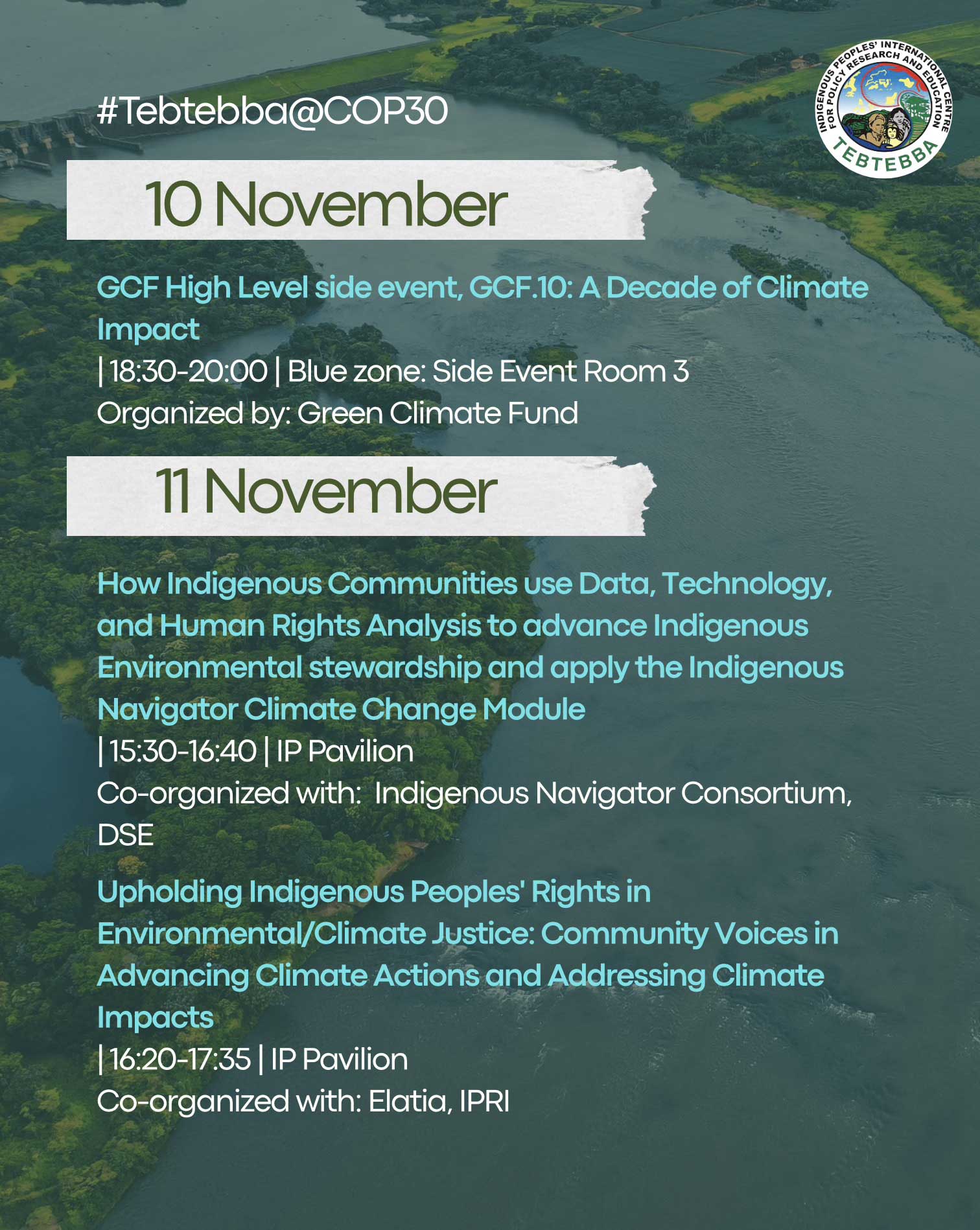
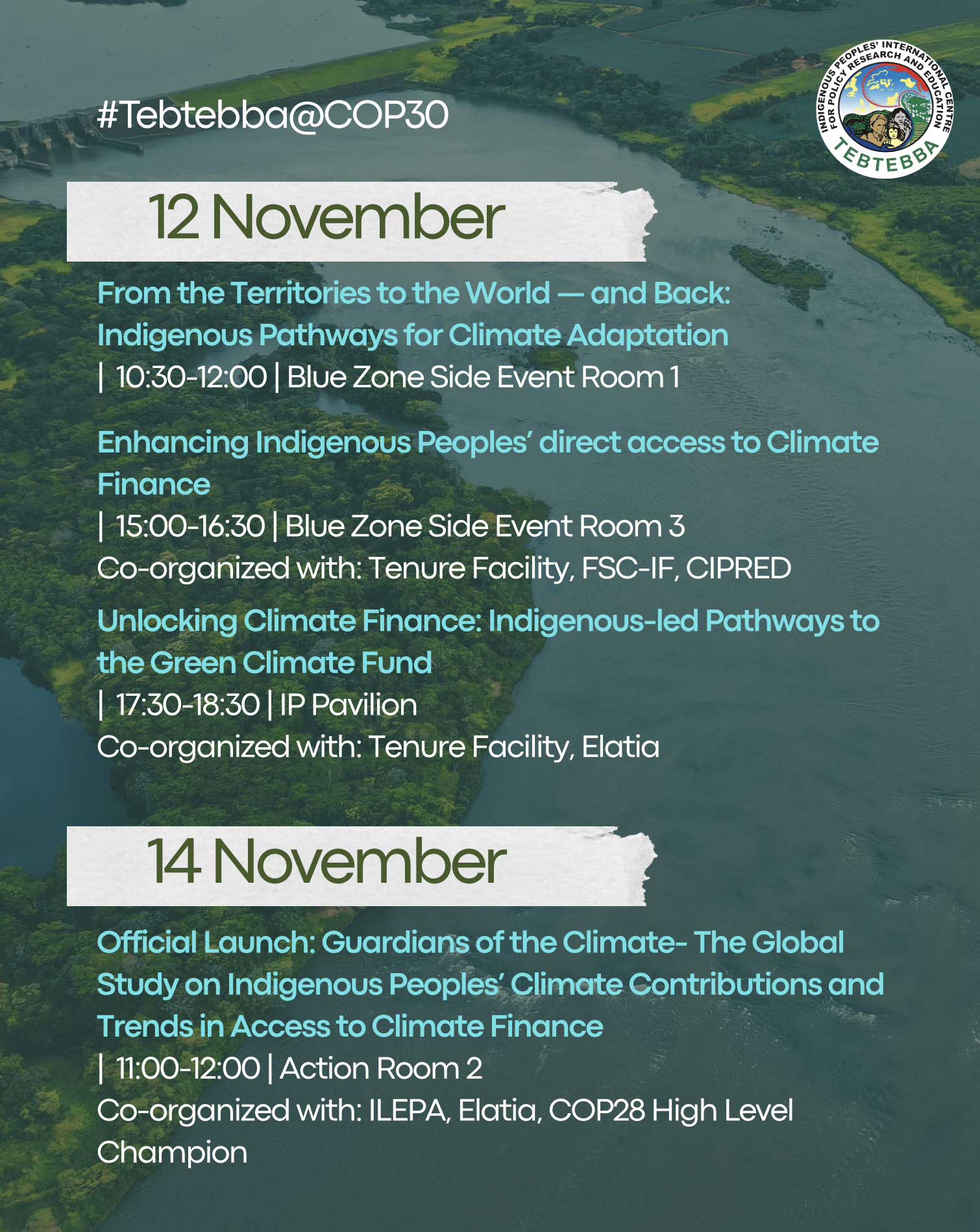
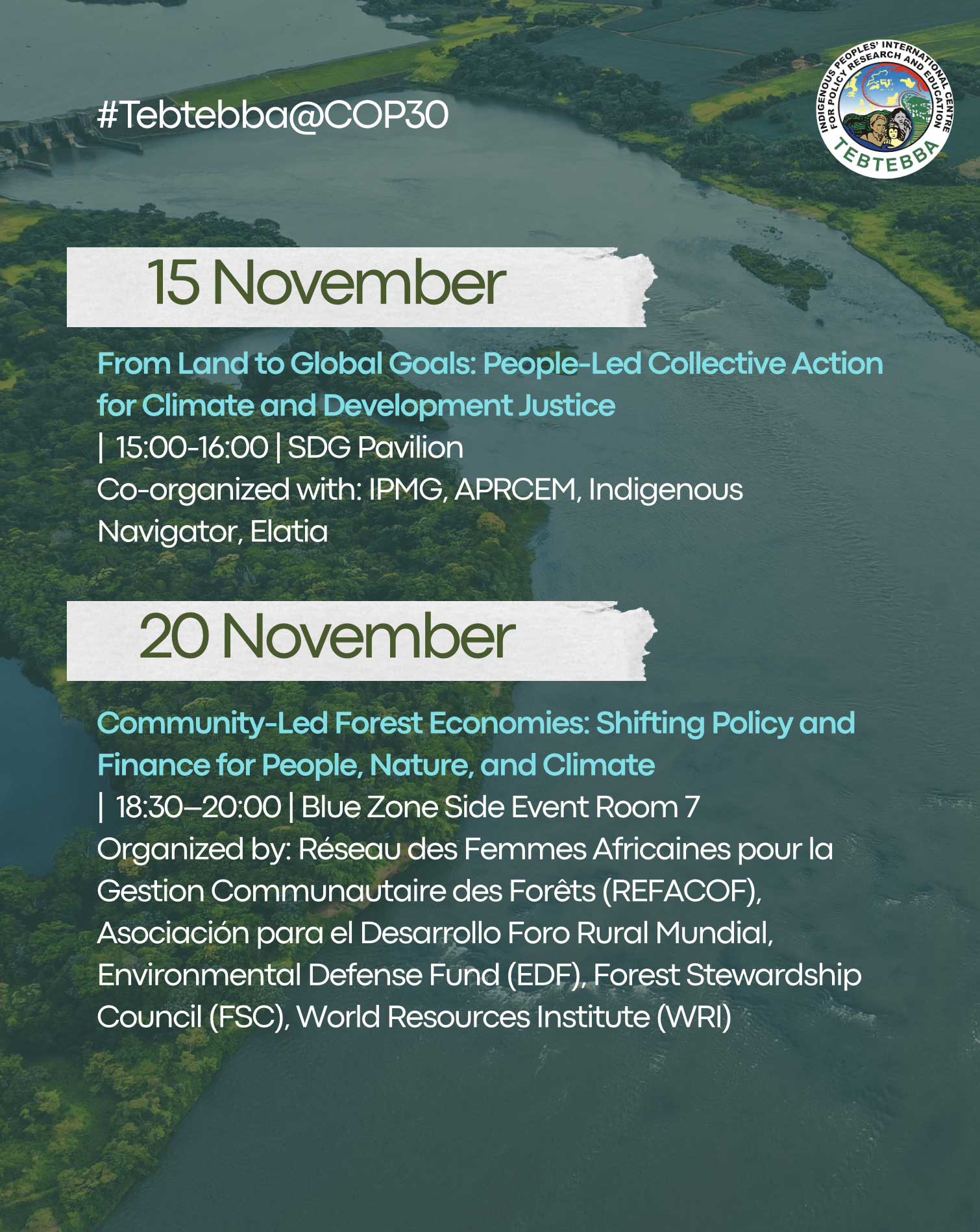
COP30 in Belem, Brazil, marks a historic moment with organizers expecting the largest-ever participation of Indigenous Peoples in a UN climate summit, with Indigenous Peoples delegates from the seven socio-cultural regions, namely: Africa, Arctic, Asia, Central and South America and the Caribbean, Eastern Europe, Russian Federation, Central Asia, and Transcaucasia, North America, and the Pacific.
What Indigenous Peoples are Pushing for:
- For Indigenous Peoples’ knowledge to hold equal weight with Western science in shaping climate policies like NDCs and NAPs.
- Indigenous Peoples to be recognized as co-creators and contributors of climate solutions, not merely as consultees or beneficiaries.
- Direct and equitable access to climate finance for Indigenous Peoples to enable self-determined and Indigenous-led climate action.
- A just transition that upholds Indigenous rights, FPIC, gender equality, and Indigenous women’s leadership.
- Protection for Indigenous Environmental Human Rights Defenders.
- Safeguards that protect rights, ensure land tenure, and uphold FPIC over Indigenous lands and resources.
- Climate policies to uphold Indigenous Peoples' knowledge, ensuring its preservation and transmission for the next seven generations.
- Ensure the full, equal, and meaningful participation and leadership of women in all climate actions and decision-making processes.
Why Belem Matters:
- Located at the gateway to the Amazon, Belem symbolizes the urgency of protecting the world’s largest rainforest.
- COP30 is being hailed as the “Peoples’ COP” and the “implementation” COP by the COP30 presidency, a summit emphasizing grassroots leadership, voices of Indigenous peoples, and locally-led climate action.