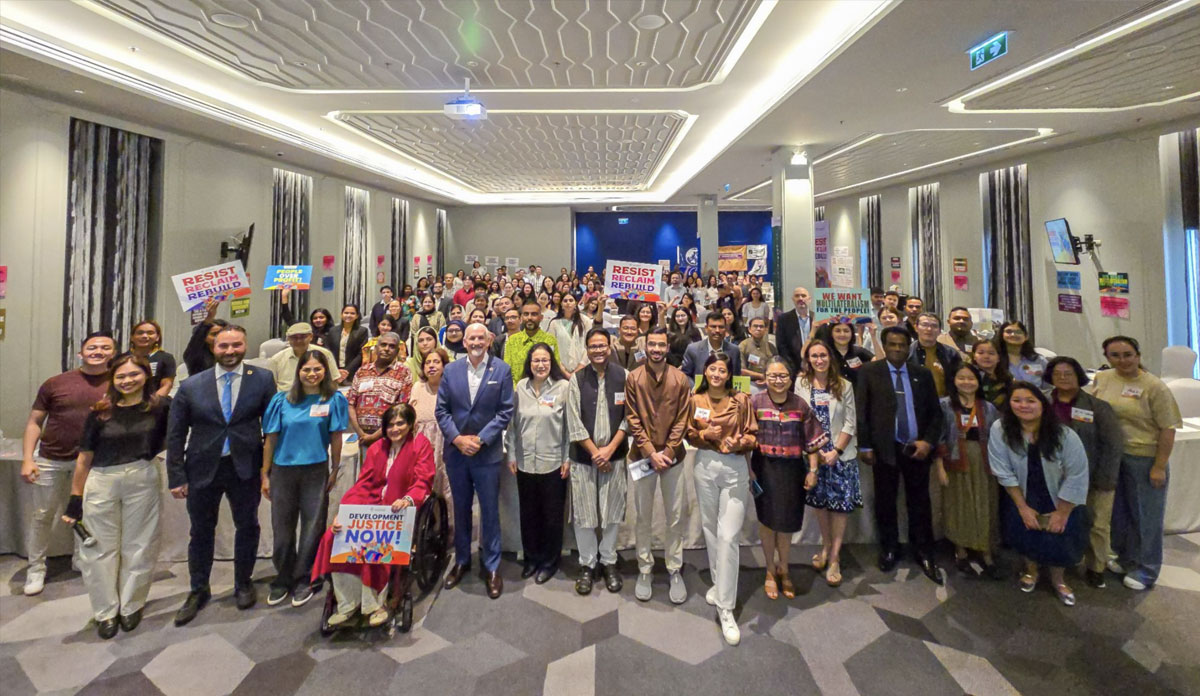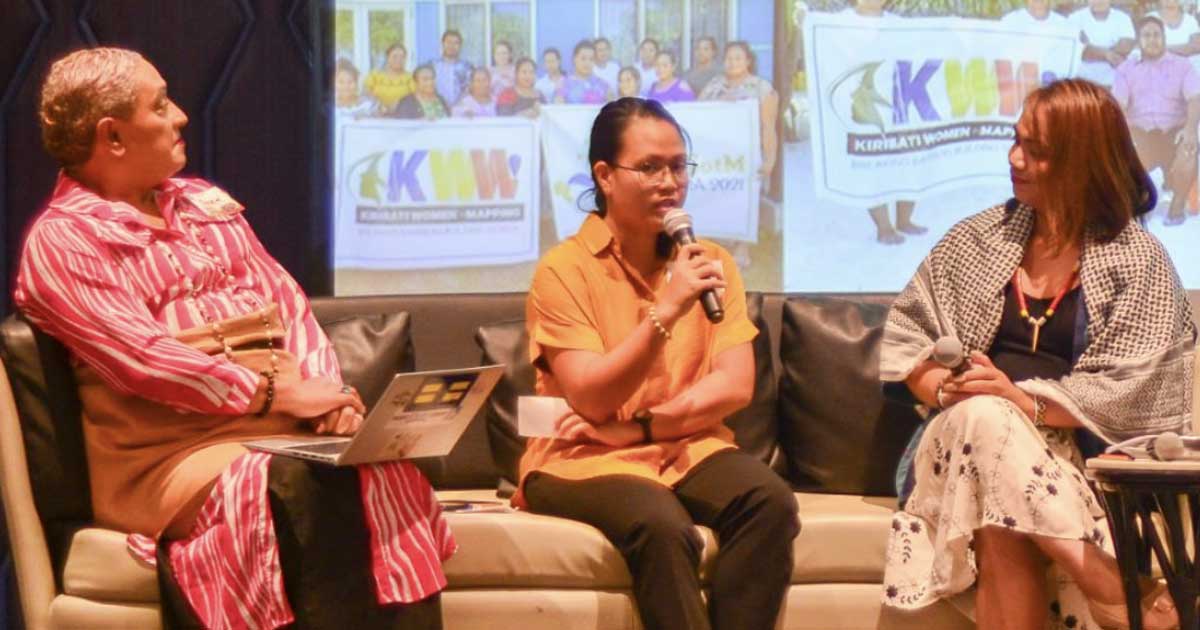
At the 2026 Asia-Pacific Peoples' Forum on Sustainable Development (APPFSD) held on February 22–23, Tebtebba Foundation joined forces with grassroots movements and civil society organizations from diverse constituencies and subregions to call for multilateralism that truly serves Peoples. This year's Forum centered on the theme Resist, Reclaim, Rebuild: The Peoples' Demand for Development Justice.
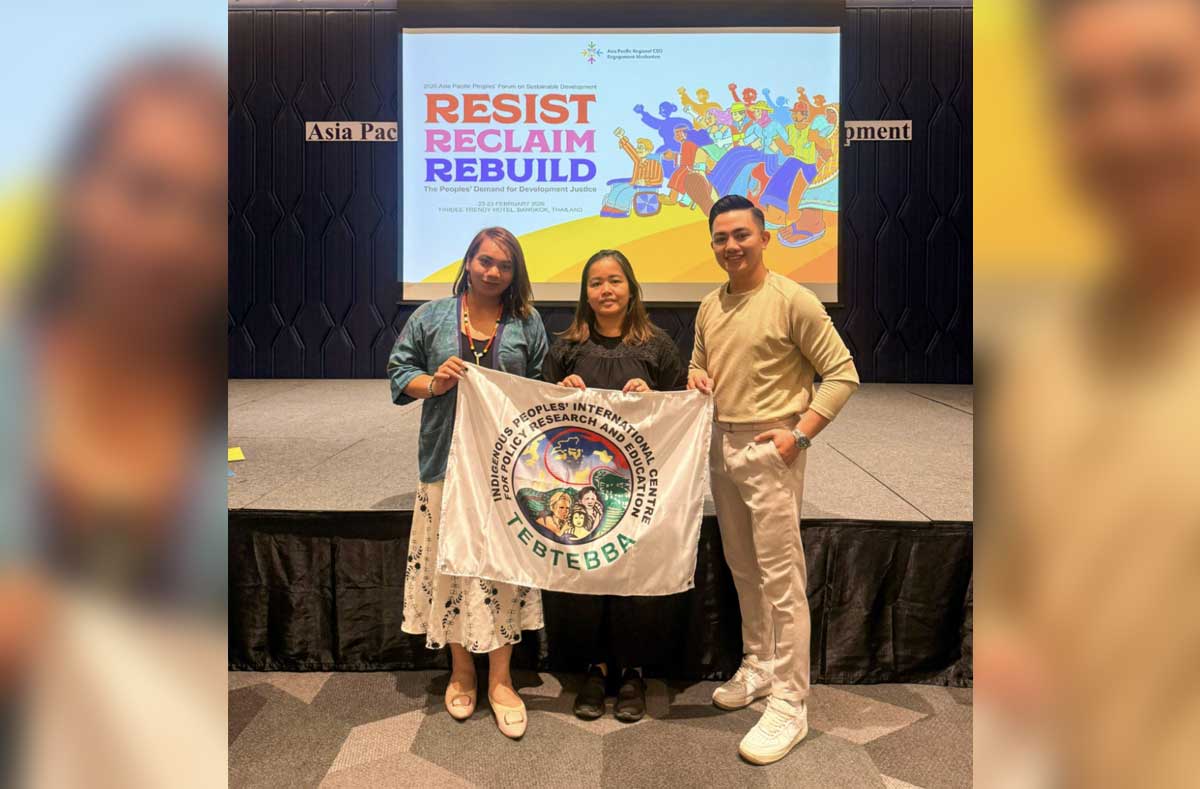
The APPFSD acts as a vital venue for critiquing and reshaping the global development agenda. While official channels grow increasingly exclusive, the Peoples’ Forum offers a transparent alternative where grassroots and civil society organizations can assess local conditions and present counter-narratives to prevailing neoliberal policies.
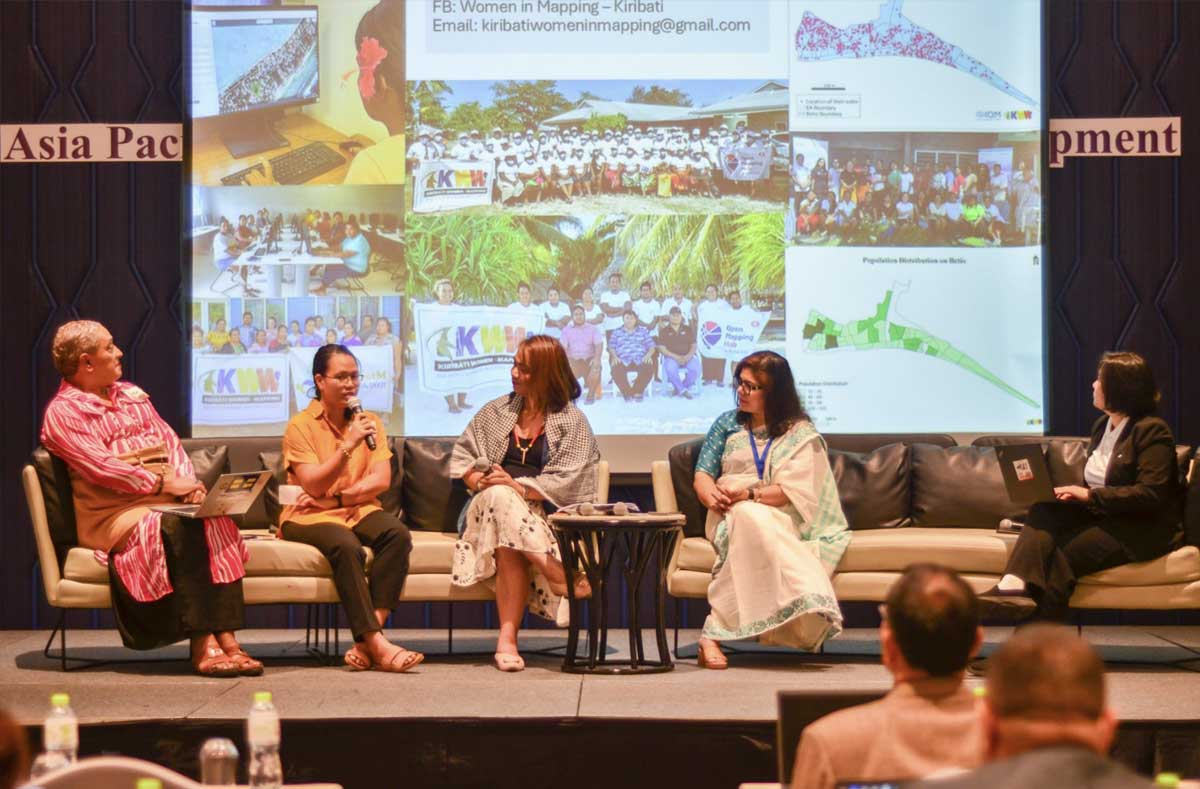
Mitch Teofilo, Portal Technical & Project Officer/ IPMG Global Coordinator and Advocacy Officer for the Indigenous Navigator of Tebtebba, facilitated a session Beyond VNRs: Democratising Data and Demanding Accountability amidst Shrinking Civic Space. The session aimed to analyze the Voluntary National Review (VNR) as an important accountability platform and looked at ways to promote Peoples' evidence and community monitoring alongside or in contrast to official data. It focused on community and civil society engagement, influence and accountability mechanisms within and beyond the VNR process, particularly in the context of shrinking civic space. Panel speakers included Ueakeia Tofinga from Kiribati Women in Mapping, Joey Joleen Mataele from the Tonga Leitis Association, Huey Yi Lee from the Buddhist Tzu Chi Foundation and Amina Khatun from Plan International.
Having attended numerous international forums, Tebtebba Executive Director Helen Biangalen-Magata remarked that the gathering was the most vibrant and colorful space she had ever encountered. She pointed out that in typical UN documentation, Indigenous Peoples including women are frequently mentioned only at the very end of a text, often grouped with other marginalized communities.
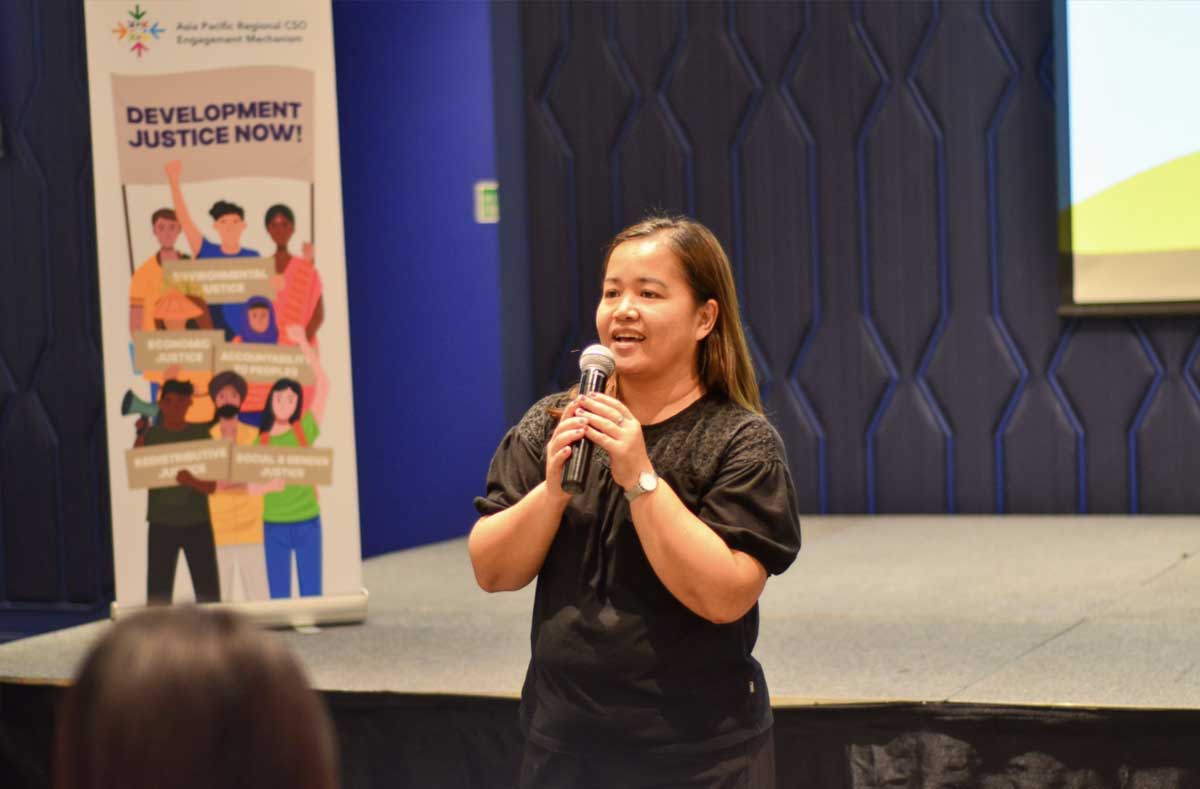
In contrast, she noted the power of communities was clearly visible and active at the Forum. She expressed deep appreciation for the participants and impactful work they were doing within their respective communities, highlighting that the experience had left her feeling profoundly uplifted. Drawing on her own Indigenous heritage, she introduced the concept of apapuy, a traditional evening gathering in which elders, youth and women gather around a fire to exchange ideas after a day’s work.
"The work doesn’t end here; actually, the work is just starting here. But the real work is happening where our homes are, our communities are," Helen added.
The Peoples’ Forum, backed by the Asia Pacific Regional Civil Society Engagement Mechanism (APRCEM), serves as a space where various communities build power and unity through shared goals. This platform is essential as we head toward 2030—as it serves as critical intervention to overcome structural barriers, realign lagging global targets, and amplify public voices in international discussions increasingly dominated by corporations and governments.
The Forum served as a critical preparatory space for the intergovernmental 13th Asia-Pacific Forum on Sustainable Development held at the United Nations Conference Center in Bangkok, Thailand from February 24–27.