
At the 44th Green Climate Fund (GCF) Board Meeting in Songdo, Incheon, South Korea last March 25–28, various advocates including civil society, local communities and Indigenous Peoples called for better delivery of the GCF mandate, respect for and recognition of Indigenous Peoples’ rights, and direct access and arrangements for climate financing. The GCF Board approved a total of 18 Funding Proposals, amounting to USD 960.3 million of GCF Resources, with a total value of USD 2.54 billion, including co-financing.
The projects were presented by 7 Direct Access Entity (DAE) and 6 International Access Entity (IAE), which serve as the main partners through which the Fund channels climate finance. The Board also approved 10 new accredited entities (AE) and 2 upgrades of scope of accredited entities. The AE are organizations that have been formally approved to access and manage GCF resources on behalf of countries. In addition, internal policies and operational decisions of the Fund were discussed, including the Board retreat, regional presence, the Updated Strategic Plan for the GCF 2028–2031 and other evaluations and reviews conducted by the Secretariat and Independent Units.
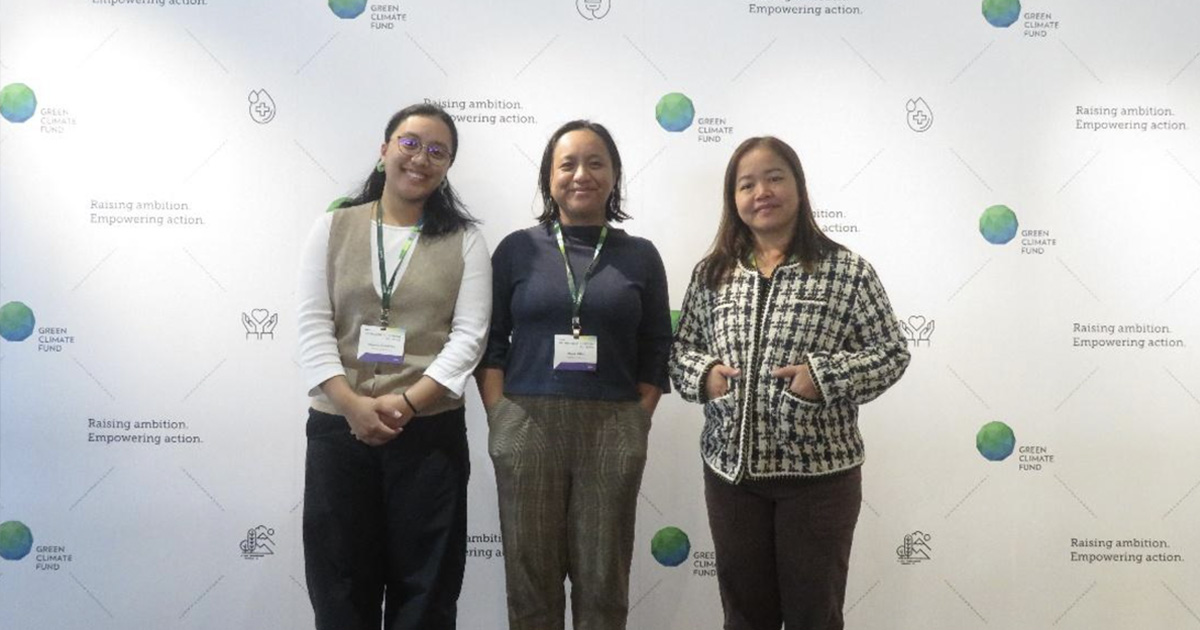
Representing Tebtebba, Helen Biangalen-Magata, Abigail Kitma and Melessa Carrao participated in the 44th GCF Board Meeting. As part of the larger GCF Civil Society Organization (CSO) observer network, the team also joined several preparatory meetings held from March 21–24 with various organizations and representatives within the network.
Several concerns, recommendations and expressions of support regarding Indigenous Peoples were raised during the Board meeting. Some of these were highlighted in specific Funding Proposal designs, reports, evaluations and other action and information items, as well as during the consideration of Accreditation Proposals. These included the integration of Indigenous Peoples’ knowledge in project designs, inclusion of Indigenous Peoples in the planning committees, and engagements and meaningful consultations with Indigenous Peoples.
With regard to the funding proposals, the Board Members and CSO observers requested clarification on the Environmental and Social Safeguards of certain Accredited Entities' methodologies and frameworks in including Indigenous Peoples in their projects. The role of the Indigenous Peoples’ Advisory Group (IPAG) was also cleared up by the CSO network; while its mandate is to provide guidance to the Secretariat, Accredited Entities, Nationally Designated Authorities and the Board as needed, the IPAG cannot and should not speak on behalf of all Indigenous Peoples. Hence, the Secretariat is encouraged to engage with Indigenous Peoples directly on matters that affect them.
The CSO active observers urged the Fund to prioritize transparent, community-accessible processes for accountability and redress, and called for moving beyond token consultation toward direct, meaningful engagement with Indigenous Peoples in line with the GCF’s own Indigenous Peoples’ Policy. The CSO active observer from Developing Countries, Kairos Dela Cruz, highlighted the need for the Fund to ensure its commitment to human rights and for openness of Board Members and AEs in engaging with civil society, local communities and Indigenous Peoples. The Developed Countries' CSO active observer, Tara Daniel, expressed concern about the GCF's current direction, specifically on the unclear integration and prioritization of the Private Sector Facility, the lack of support for Direct Access Entities, and the use of AI in accessing data for reports and evaluations and where it is being deployed.
The GCF Board has decided to establish a Regional Presence. Moving from a centralized model to meeting the differentiated needs of Developing Countries on the ground, the decision ensures the GCF becomes closer to countries and establishes closer linkages with AEs and National Designated Authorities.
The regional offices are to be set up in:
- Latin America and the Caribbean (Panama City, Panama);
- Eastern Europe, Central Asia, and the SWANA (Southwest Asia and North Africa) / Middle East region (Amman, Jordan).
Africa is set to establish a regional office operating across two locations:
- East and Southern Africa: Nairobi, Kenya, and
- Central, North, and West Africa: Abidjan, Côte d'Ivoire.
A subregional office covering the Pacific will be located in Suva, Fiji.