
pdf IN Policy Brief 3 - Institutionalizing Indigenous Studies/Education in Philippine Higher Education Popular
200 downloads
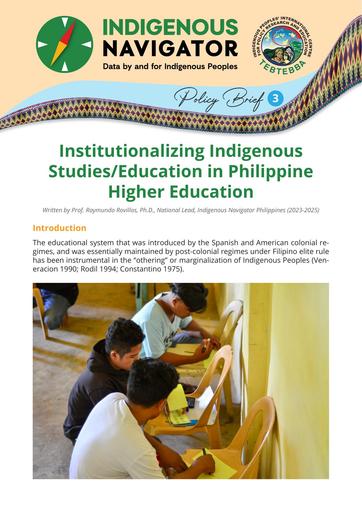
The educational system that was introduced by the Spanish and American colonial regimes, and was essentially maintained by post-colonial regimes under Filipino elite rule has been instrumental in the “othering” or marginalization of Indigenous Peoples (Veneracion 1990; Rodil 1994; Constantino 1975).
As a cultural apparatus of the State, the educational system, which includes its structure, processes and, most significantly, its content, served to consolidate the colonial and post-colonial State. In the process, it created and reinforced ethnic differentiation. It privileged the ethnic groups that lived—forcibly or otherwise, while it simultaneously “othered” (demonized) or marginalized those ethnic groups that resisted colonial assimilation (Rodil 1994; Salazar 1997; Veneracion 1990; Rovillos 2009). Spanish colonial education dismissed indigenous knowledge and ways of knowing as “vain genealogies” (Salazar 1997) or sheer superstitious, pagan beliefs that had to be forgotten and reject ed.